
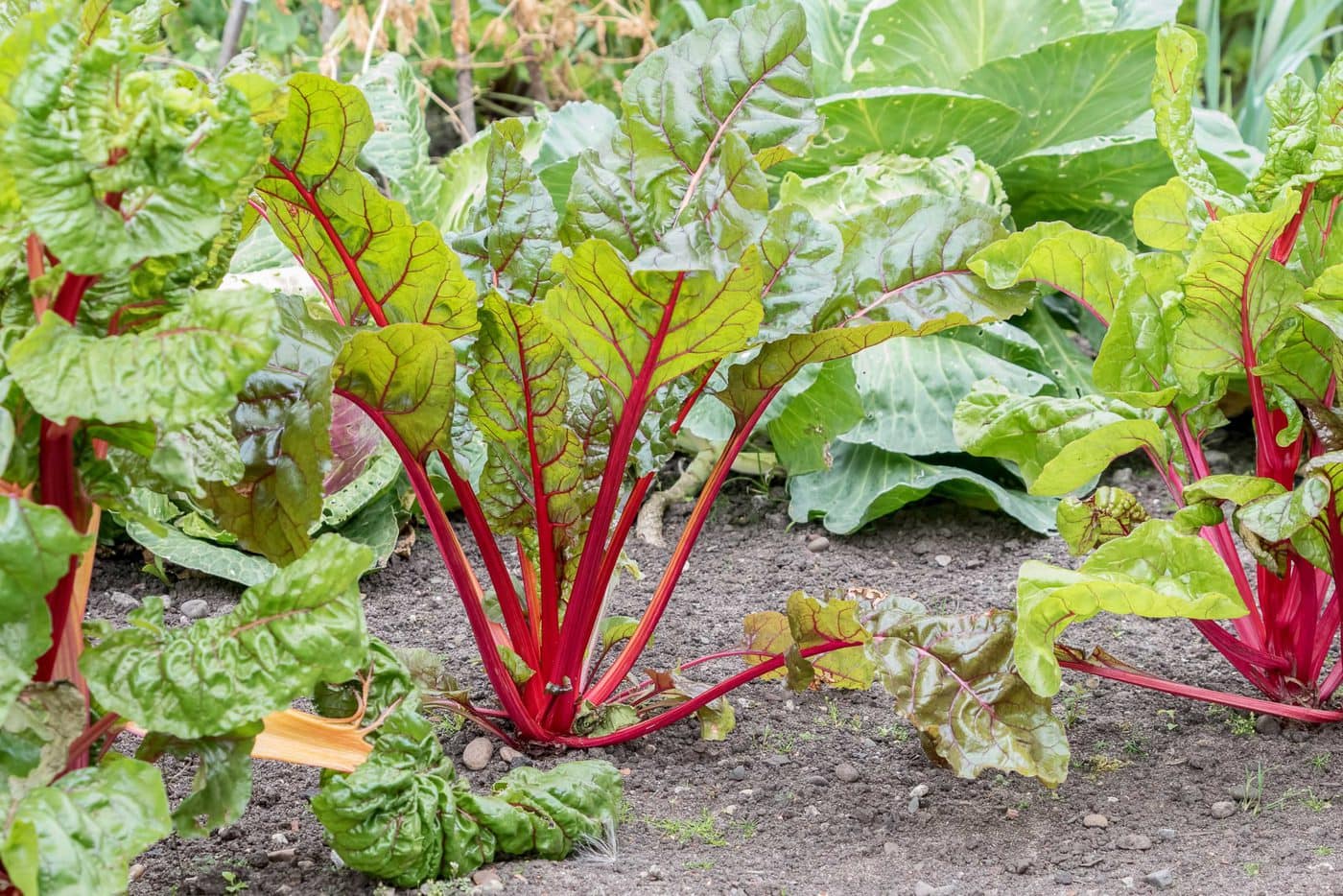
Rheum rhabarbarum Full Sun~Light Shade Soil pH: 6.0 to 6.8
Rhubarb is a cool season, perennial plant , is very winter hardy , drought resistant . After a season of growth the rhubarb crown becomes dormant and temperatures below 40 degrees [F] are required to stimulate bud break and subsequent growth.
Planting Rhubarb
The bed should be thoroughly weeded prior to planting. Rhubarb is generally purchased as crowns , rather than propagated from seed. Planting Rhubarb seeds is not recommended, except in extremely southern areas of the United States. In addition Rhubarb is generally not propagated from seed since seedlings are not always true to type. Quality nursery stock for starting new plantings is recommended; this is due to freedom from virus, crown rots, root rots and weeds.
Rhubarb crowns can be purchased from seed catalogs or a local nursery, garden center . Plant the crowns as soon as possible so they don’t dry out.
Plant with the crown bud 2 inches below the soil surface .Space the roots 36 to 48 inches apart in rows approximately 4 feet apart. Work plenty of well-rotted manure or compost into the rhubarb bed before planting
Since rhubarb is a perennial, it should be planted to one side or at the end of the garden so as not to interfere with planting and growing annual vegetables. The rhubarb plant has bold ornamental texture and size, and some gardeners find it suitable to include in a perennial flower border.
Plant (or divide) rhubarb roots in early spring while the plants are still dormant, in well drained soil. Old roots may be dug and divided to make new plantings by cutting the roots into no more than eight pieces. Each piece must have at least one strong bud.
Maintenance of Rhubarb Plants
Once established rhubarb is pretty much Maintenance free. Some weeding from time to time and maintaining reasonable fertilizer and proper soil pH.
Cultivate shallowly as often as necessary to remove weeds. Apply a complete garden fertilizer in early spring before growth begins and side-dress with a high-nitrogen fertilizer in late June. Except in poorly drained sites, organic mulches help moderate soil temperature and moisture. Do not cover the crowns. Flower stalks should be cut off as soon as they appear.
Fertilizer and Soil pH
Lime – should be applied to maintain the soil pH in a range of 6.0 to 6.8. Ph ranges as low as 5.0 are tolerable but not recommended.
Nitrogen – rhubarb has a high nitrogen requirement. Apply as necessary in the first year, otherwise apply nitrogen at bud break along with the phosphorus and potash . Apply a side dressing of nitrogen after each harvest.
Fertilize with a handful of a 5-10-10 fertilizer in the spring. A modest midsummer application will also benefit these vigorous plants.
See Understanding Fertilizer Labels
Dividing Rhubarb Crowns
When a rhubarb crown is 6 to 8 years old, it should be dug up and divided. This should be done in the early spring . Insert a shovel about 6 inches into the ground next to the base of the plant and lift out the entire crown. Some roots will break off and should be left in the ground.
With your hands, or a small a hatchet break the crown into fist-sized pieces, each with at least a bud and one large root piece. Smaller pieces with broken roots that are at least the size of a small cigar, can be put back together as a single crown. In this case, allow more time for the plant to develop before harvesting.
Replant the new divisions immediately or as soon as possible. If planting is delayed due to weather conditions, store them in a cool dry area.. Re-hydrate the divisions before planting by soaking in water for several hours, or overnight.
Pest and Disease Problems
Diseases
Botrytis Rot is a fungus which may cause a leaf, stem and crown rot of forced rhubarb which intensifies where there is poor air circulation and high humidity. Botrytis rot is most common during rainy weather. Plant in well-drained areas. Remove infected plant parts and protect plant buds from damage caused by invertebrates such as slugs.
Control: Captan based sprays are registered for control of Botrytis Rot and should be applied in the pre-bloom stage.
Leaf Spots Circular spots, variable in size Beige centers surrounded by red . When affected tissue dies, it may drop out, leaving large ragged holes in the leaves.
Control: Remove and destroy leaves following the first frost. During harvest, remove stems with spotted leaves first. Apply fungicide used for Botrytis control.
Several viruses are also known to occur in rhubarb. Turnip mosaic, arabis mosaic and cherry leaf roll virus are common. These viruses have wide host ranges and cause mottling and ring spotting of leaves. They may be introduced in infected stock.
Control: Obtain and plant healthy nursery stock. Avoid planting virus free crowns near virus contaminated crowns.
Anthracnose occasionally infects Rhubarb. Anthracnose, caused by a fungus similar to gummy stem blight, it is favored by warm temperatures and high humidity. Most commonly in the spring when the weather is cool and wet.
Pests
Potato Stem Borer
Characteristics: The potato stem borer is a caterpillar, which when fully grown is about 3.5 cm in length and pinkish-white in color. The first stages of the insect attack only weeds, couch grass in particular. Later they move into plants with thicker stems, such as rhubarb. They may move from stem to stem, boring into the center of the stalk. The adult moths lay their eggs on the stems of grasses in August. The eggs do not hatch until the following spring. Damage can be expected in June and early July. Serious infestation can lead to an unpalatable crop.
Control of this pest is not a problem when couch grass and other weeds are controlled in and around the rhubarb plantation. Weeds should be controlled to make the field less attractive for egg-laying by the adult moth. Early spring burning of affected fields or field margins will effectively control this pest.
Tarnished plant bug
The Tarnished plant bug is a common sap-feeding insect which attacks a wide range of plants. They carry fire blight disease and infect plants as they feed. Black spots and pitting can be seen on the stem, tips, buds, and fruit.
Tarnished plant bugs are resistant to many forms of insecticides. Neem has proven highly effective against this pest.
Neem prevents the larvae from developing normally and is also a good alternative for later larval stages. Neem degenerates rapidly in nature and needs to be reapplied frequently.
Slugs and Snails
Characteristics: Slugs may be a problem in plantings with heavy soils, poor drainage and in weedy situations. Slugs fed at night, by rasping the surface of stems, leaving unsightly scars, which reduces the usability of the stem.
Prevention: Provide good soil drainage. Keep weeds under control. Remove leaves and trash from the field when harvesting. Do not use manure and/or mulches in areas of field prone to slug damage. See Slugs and Snails for more extensive data
Harvesting Rhubarb
Do not harvest rhubarb during the first year of planting. Newly set plants need all their foliage to build a strong root system. Stalks may be harvested for 1 or 2 weeks during the second year and for 8 to 10 weeks (a full harvest season) during the third and subsequent years. Harvest in the fall only when the plants are to be discarded the next season.
If seed stalks and flowers develop during the spring and summer, cut them from the base of the plant as soon as they appear and discard them. Rhubarb is an extremely hardy plant. It is a beautiful garden plant, with huge extravagant, lush green leaves and pink or red stalks. Rhubarb is an ancient plant as well.
Purported Medicinal Properties of Rhubarb
Use of rhubarb has been recorded as early as the 1st century AD in China and it has been cultivated in the West since the 18th century. Its primary medicinal use is as a laxative safe even for young children due to its gentle action. It is also effective in the treatment for many digestive problems.
**It is a laxative when taken in large doses but has a constipating effect in smaller ones.
Warning : Rhubarb contains oxalate, which has been reported to cause poisoning when large quantities of raw or cooked leaves are ingested, the stalk, which is what we eat contains very little oxalates and is not considered a threat.