|
How to Grow
Peppers
Abigal Gordon's Home Grown
Peppers luv2garden.com
Planting and
Transplanting
|
Spacing Pepper
plants
|
Fertilizing
Varieties of Peppers
|
Common Pepper Plant
Pests
| Harvest
and Storage
Many varieties of
peppers can be grown in backyard vegetable gardens. The most
popular peppers are the
sweet bell and
banana types. Peppers are generally harvested in the
immature green stage .
Planting Peppers
Peppers are best
started from indoors in late winter, from seeds in
peat pots or cell packs and then transplanted
into the garden in late May to early June, or when
nighttime temperatures in your region are
consistently above 50 degrees.
Peppers are generally grown for home gardens from
using transplants rather than direct seeding. If you
are buying transplants , select sturdy plants
that have at least 4 sets of true leaves
[See
Figure 1]. Avoid plants that have
already flowered, and Inspect plants at the
time of purchase - be sure they have no spots or
lesions on them .
Space plants 16-18
inches apart in rows 24 inches apart or more,
depending on the type of cultivation used. Water
plants thoroughly immediately after transplanting.
|
|
Peppers require moderate
amounts of fertilizer. A
soil test is the best method of determining the
needs of your crop, but is generally not feasible
for home gardeners.
Home gardeners should make a preplant application of 5-10-10 at the rate of 3
pounds per 100 square feet. Use a starter solution for transplants, and
side dress cautiously after the first fruit reach about the size of a dime using
three tablespoons of 33-0-0 per 10 feet of row).
Side dress cautiously until a large number of
peppers are set. Too much nitrogen before fruit set causes all foliage and no
fruit. After fruit set, fertilize regularly using a complete fertilizer.
Soil pH should be 5.8 to 6.5 for best growth.
After the plants have set and are well
established, apply a thin covering of mulch to conserve soil moisture,
and suppress weed growth.
Control weeds by hand-pulling or
shallow cultivation to avoid injury to the plant roots. The incidence of
disease can be reduced by proper spacing and by watering early in the
day so leaves dry quickly or by using soaker hoses.
Inexpensive Water timer systems are available .
Pruning and Thinning Pepper plants
Peppers,
as well as eggplants produce multiple small flowers.
Removing some of these flowers will make your plant
devote more energy to developing bigger vegetables
rather than a lot of smaller ones.
Early
season pepper plant pruning should be done when the
plant is one foot tall and should cease once peppers
have set. Generally, pepper plants have a Y shape
and branches then create smaller and smaller Y
shapes jutting off of the main stems. By the time
the plant is a foot tall, you will be able to see
the strongest branches on the plant. Cut back any
smaller branches, including suckers. Be careful not
to damage the main stem ,which will cause the plant
to perform poorly.
|
|
|
|
|
Recommended
Varieties of Peppers for Home Growers
The number of peppers per well cared for plant varies
from variety to variety. Sweet Bell pepper plants
may produce 6 to 8 peppers per plant. Some of the smaller Hot
varieties produce dozens.
The following are my personal favorites, you of course may prefer to scan
any of the many online
nurseries and seed catalogs.
|
Hot Varieties |
|
Sweet Varieties |
Jalapeno
Bears early, sets fiery 3-inch
fruits all summer. Goes from dark green to rich red--when
they're hottest! . 72 DAYS |
|
Sweet Bell Pepper
Early yields of large, meaty 4
1/2-inch fruits. Blocky shape is super for stuffing.
70 DAYS.
|
Tabasco Pepper
Small, slim and
really hot--the true Tabasco chili. Bright scarlet fruits
ornamental and easy to spot at harvest. 120 DAYS. |
|
Sweet Banana Pepper
Elongated
6-inch peppers turn scarlet when fully ripe but stay sweet and mild.
A longtime favorite for flavor. Delightful in salads, exquisitely
pungent pickled. |
Anaheim
Mildly hot, 6-8 in., medium-thick,
tapered peppers ripen from dark, green to red. Bushy, upright
plants.
|
|
Italian Relleno Sweet Pepper
Early and extra big! Huge fruits
often measure 5 inches long, 3-4 inches wide. Mild and sweet at
every stage 65 DAYS. |
|
Hungarian Yellow Pepper
Reliably produces plenty of tapered, 6 to 7-inch-long peppers,
even in cool regions. Medium-hot, yellow fruits ripen to red,
are great for pickling or canning |
|
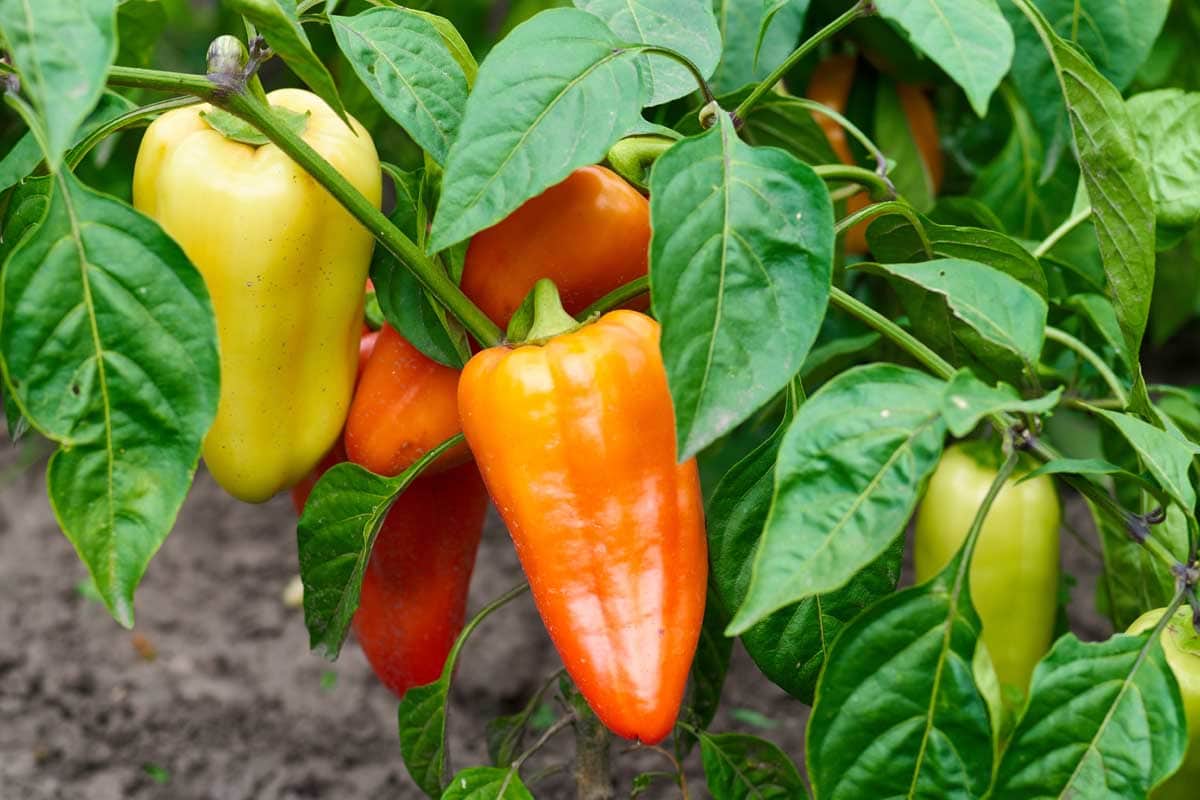
Sweet Bell Pepper - Red, Gold, Purple, Orange, White
|
Seed and
Nursery Catalogs
Diseases
Common to Pepper Plants
|
Anthracnose - Caused by
a fungus [Colletotrichum
acutatumi]. Circular or angular sunken lesions develop on immature fruit
of any size.
Often multiple lesions form on
individual fruit. When disease is severe, lesions may
coalesce. Pink to orange masses of fungal spores form in
concentric rings on the surface of the lesions
The fungus can be introduced into a
crop on infected seed. During warm and wet periods, spores
are splashed from diseased to healthy fruit.
Recommended treatment -
Bonide Remedy Fungicide
References
Anthracnose Fruit Rot of Pepper {Ohio State
University Extension Fact Sheet}
Vegetable Growers News -Pepper Diseases
|
 |
|
Phytophthora Blight -
caused by the fungus Phytophthora capsici.
Other names
applied to this disease of peppers are
Damping off
Phytophthora root
rot
crown rot
stem and fruit
rot.
All of these names can apply since all parts of the
pepper plant are affected.
Plants infected at
early stages die off rapidly, Plants infected later show an irreversible wilt
.
Often a number of plants in a row or in a roughly circular
pattern will show these
symptoms at the
same time.
References
Phytophthora Blight of Pepper & Other Vegetables
|
 |
|
Bacterial Spot
produces circular scabby spots on
immature fruits and on leaves. Tomatoes and Sweet peppers
are effected. The bacterium is seed-borne and is often
carried on diseased transplants. It can also occur in
certain weeds . It overwinters in soil and on old
plants and pepper plants. Bacterial spot is favored by
warm temperatures , high humidity, long dew periods, and driving
rain. Recommended treatment -
Bonide Remedy Fungicide
Pepper speck. this disorder appears as spot-like
lesions that penetrate the fruit wall; cause is unknown;
some varieties are more susceptible than others
|
|
Gray leaf spot -
circular spots on leaves, the spots are at first brown,
later turning to various shades of white with sunken
centers, and reddish-brown margins. Spots may appear on
stems also .
Gummy stem blight -affects
the leaves, stems, and fruits of all cucurbits. Circular,
tan to dark brown spots appear on the leaves, often first at
the margins, and enlarge rapidly until the entire leaf is
affected . Satisfactory chemical control is possible with
regular applications of protectant fungicides.
|
|
|
|
1. ] Purchase vigorous, healthy plants
from a reputable supplier. Pepper Plants, being susceptible to
diseases,
viruses and insects, some varieties have
been bred or hybridized to be resistant to certain pests.
Resistance to these pests is usually
listed on the plant label using the following abbreviations:
V = Verticillium Wilt
F = Fusarium Wilt
FF = Fusarium Wilt race 1 and 2
N = Nematode
T = Tobacco Mosaic Virus
A = Alternaria (Early Blight)
TSW = Tomato Spotted Wilt
Remember that resistance to these problems does not mean
they are 100 % immune,
good cultural practices are still
important.
2.]
Crop Rotation in your garden planting area
3.] Remove and destroy all plant
refuse in the fall and use deep cultivation to bury any
remaining refuse.
4.] Do not place diseased plants in the
compost heap, as this will only serve to carry bacterial or
fungal infestation into the next growing
season.
5.] Avoid over watering . Use surface
watering methods. Do not handle plants when the vines are
wet.
6.] Weeds compete with vegetables for
soil moisture and nutrients and also serve as hosts for
insects
and disease carrying bacteria and fungus.
Control weeds in and around the garden .
7.] Control insect pests such as
aphids, which are known to transmit diseases from
plant to plant.
8.] Use
plastic or
organic mulches to reduce disease and blossom-end rot problems.
9.] Choose a sunny location for
your tomatoes. Leaf disease problems are much less likely
to occur in a
sunny location than in a shady one.
10.] Apply recommended
fungicides according to label directions at the first sign
of leaf spot diseases |
11.] Remove abnormal or unhealthy appearing
plants as soon as they are observed. To reduce the
spread of
suspected diseases wash hands and tools with a mild detergent after
handling suspect plants.
Safer 3 in 1 Garden Spray (Fungicide, Miticide, & Insecticide)
Potassium salts of fatty acids are derived from plants and act as a
contact insecticide to permanently paralyze insects and mites. Sulfur is
a naturally occurring element that effects the body functions of insects
and mites. Sulfur also affects the ability of a fungus to continue
growth, making it an effective fungicide. The blend of these two natural
substances provides a simple natural solution to insect, mite and fungus
control. Use only on affected area as this is a broad spectrum insect
killer. This product is best applied when the air temperature is less
than 90 degrees as both active ingredients can burn tender foliage in
higher temperatures. Safe for use around plants, animals and people. Do
not use in full sun or when temperature is above 90 degrees Fahrenheit.
Do not use with in 4 weeks following application of oil spray. Effective
on powdery mildew, black spot, leaf spot and rust. Kills most insects
including aphids, beetles, caterpillars, crickets, earwigs, lace bugs,
leafhoppers, mites, thrips, and whiteflies.
There are nearly 40 insects that attack pepper plants. The major ones
include the Pepper Weevil, which is black colored, gray or yellow marked,
Pepper Maggot, Cutworms, Flea beetle, Leaf Miner and Tomato Hornworms.
Aphids
become a problem by mid summer. Pepper maggots, earworms and
borers as well. By late summer, if nor properly controlled corn borers,
armyworms, and corn earworms will reach highly destructive numbers.
|
Pepper Weevil -Pest of both sweet
and hot varieties of pepper.
In the southern USA, Central America, Hawaii and Caribbean.
Adult pepper weevils feed on fruit and leaf buds and lay eggs on
flowers, buds and fruit.
See
Bugwood Network - Pepper Weevil
|
|
Beetles -Colorado
Potato Beetle, Flea Beetles, Harlequin Bug
|
|
Aphids - See
Aphid
Control
Worms -
Hornworms, Pepper Maggot
, Beet armyworm, Corn Earworm,
Cutworms, Corn borer
Mites
-
Tomato Russet Mite
Whiteflies
See
Pest Control for more extensive data
Sharpshooter Natural Insecticide
Citric acid destroys the wax coating of the insect's respiratory system.
When applied directly, the insect suffocates. Sharpshooter is biodegradable.
Persons with known citrus allergies may be affected. Do not spray on red
mature fruits. Effective on most insects including aphids,
beetles, caterpillars, cutworms, earwigs, flies, gnats, lacebugs,
leafhoppers, loopers, mites, moths, snails/slugs, mosquitoes, whiteflies
|
| |
|
Harvesting
Fruits can be harvested at any time
during the growing season and at any size desired. Green bell varieties,
are generally picked when they are fully grown and mature—3 to 4 inches
long, firm and green. Fruits will easily snap off the plant when they
reach maturity.
Care should be taken when picking your
peck of peppers from the plants, the branches are generally
brittle. Hand clippers can be used to cut peppers from the plant to
avoid stem breakage.
Sweet and Bell peppers are generally
picked immature but full-sized and firm. However, if they are
allowed to ripen on the plant they will be sweeter and higher in vitamin
content. Hot pepper Varieties are usually harvested at full maturity.
If the fruits are cut rather than
pulled off. The new, colored bell pepper fruits may be left on the plant
to develop full flavor and develop fully to red, yellow, orange or
brown; or they may be harvested green and immature. Hot peppers are
usually harvested at the red-ripe stage.
Contact
Information
|
| |
|