

There are several species of mites that attack plants. Often known as spider mites, red spiders, red mites, or spinning mites. Mites are barely visible to the naked eye. Controlling mites is essential for a successful garden.
Mites attack a wide variety of garden and house plants, damaging plants by sucking sap from the foliage. Light infestations will usually go unnoticed.
Heavily infested plants take on a spotted appearance, and the plant gradually yellows. In many cases, the leaves will drop off after the characteristic fading or yellowing. Badly infected plants will usually have a fine cobwebby appearance on the leaves or needles.
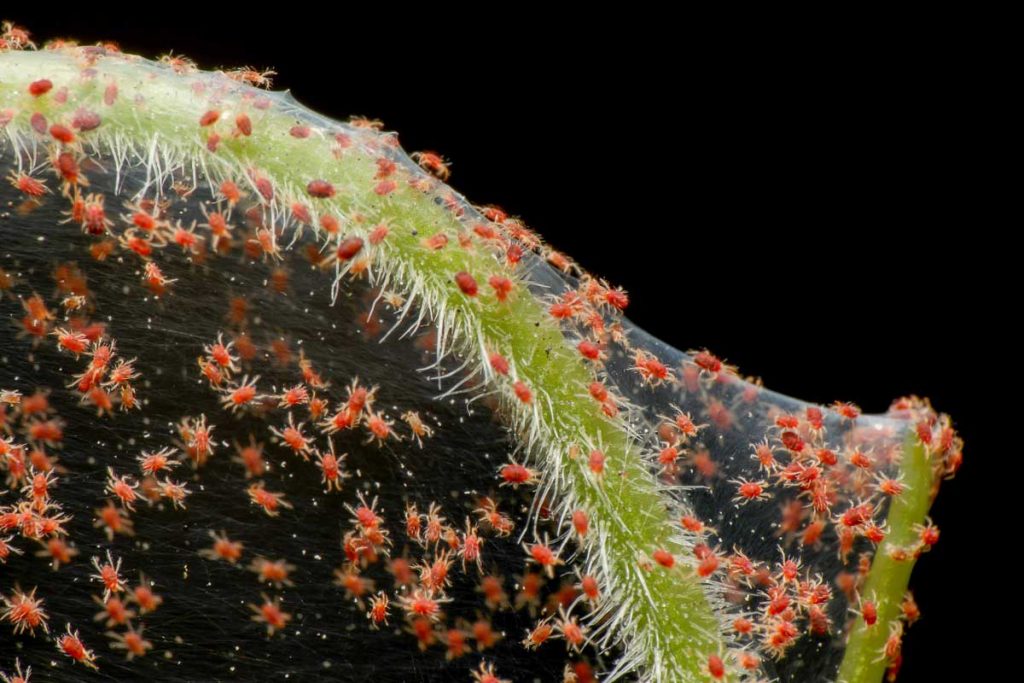
No matter what types of plants you grow, it’s likely something spider mites will eventually attack. In heavy infestations, they may spin a protective web over the surface of the foliage where they are feeding.
Infestation should be controlled immediately, If indoor or greenhouse plants are involved the plant and nearby plants should be isolated/quarantined. If garden plants are involved the infested plant should be destroyed and neighboring plants treated.
Controlling Mites on Houseplants
Identify spider mite damage by looking on the undersides of leaves for tiny, rust-colored specks and webs. Plants with spider mite damage have a sickly appearance and, possibly, yellowing of the leaves.
Hold a piece of white cloth or paper under a leaf, and tap the leaf – give it a good hard boink. If you have mites you should see small rust-colored spots on the paper or cloth -spider mites.
Quarantine the infested plant from any others, to avoid further infestation and spray it down with a healthy stream of water, strong enough to blast the mites off , but not to the point where you would damage the foliage.
The water should wash most of the mites off. Then spray the plant with Insecticidal soap, Horticultural Oil, or Neem Oil.
In the past I have used a blend. Put a half teaspoon of horticultural oil and insecticidal soap into a quart of water and give the plant either a thorough misting or gently wipe all surface area with a clean non abrasive cloth soaked in the solution. Remove any dead or dying foliage, and discard it.
For heavier stubborn infestations or recurring mite infestations spray the house plants with Neem Oil. Water the plant well before spraying. Numerous chemical pesticides are also available to control mites.
Insecticidal oil sprays applied during dormancy are also helpful if mites are a recurring problem.
Controlling Mites on Garden Plants
Make a mix of insecticidal soap and water [As per label instructions, some require dilution – some don’t]. Spray all leaf surfaces where mites could possibly be hiding.
It’s preferable to do this in the morning or early evening as the soap can actually damage the foliage in hot dry conditions. Don’t allow the soapy solution to dry completely, rinse it off with a second spray of clean water to remove residual soap that could damage or leave behind an inhibitive film on the plant surfaces.
Repeat this process weekly until you no longer find mites this same process works for aphids as well.
If you already using neem oil in an integrated pest management scheme you may want to skip the insecticidal soap and go straight to the neem oil / bioneem.
Insecticidal soap actually has a limited shelf life of no more than 2 season, 3 at the most. If using an older bottle of Insecticidal soap be sure the mixture is relatively clear, if small solid clumps appear in the solution it’s no good and could damage your plants.
This procedure doesn’t work well on evergreens or conifers as the mites that commonly infest these plants have a different life cycle, and should be done in the winter months [Yes I know – who thinks about gardening at Christmas time ?].
Pesticides Registered for Use Against Mites
Numerous other Organic and Chemical pesticides are also registered to control mites.
- SaferGro Pest Out Miticide An easy-to-use, concentrated miticidal and insecticidal spray that kills eggs, nymphs and adults of aphids, spider mites and whitefly on contact. Useful on flowering plants, woody ornamentals, fruit trees, houseplants and vegetables.
- Horticultural Spray Oil. Advantages of Horticultural oil includes safety, effectiveness and limited effects on beneficial insects. Kills overwintering insects and mites
- Malathion Kills aphids, bag worms, mites, mealy bugs, whitefly and other leaf-eating insects. Highly toxic/ non organic , see all applicable restrictions, read label carefully.
- Cedarcide Non toxic , enhances microbial activity in soils, establishing healthy plant life. Repelling the egg laying insect and its offspring , future generations of insects. useful against mites.
The best commercially available predator insect available to home gardeners for the control of mites and other small pests are Lady Bugs. The appetite of lady bugs is quite remarkable.
An adult female may consume up to 60 aphids or mites a day while the smaller male may consume up to 40. One lady bug larva can eat up to 350 aphids or mites during its development.